

Beginning
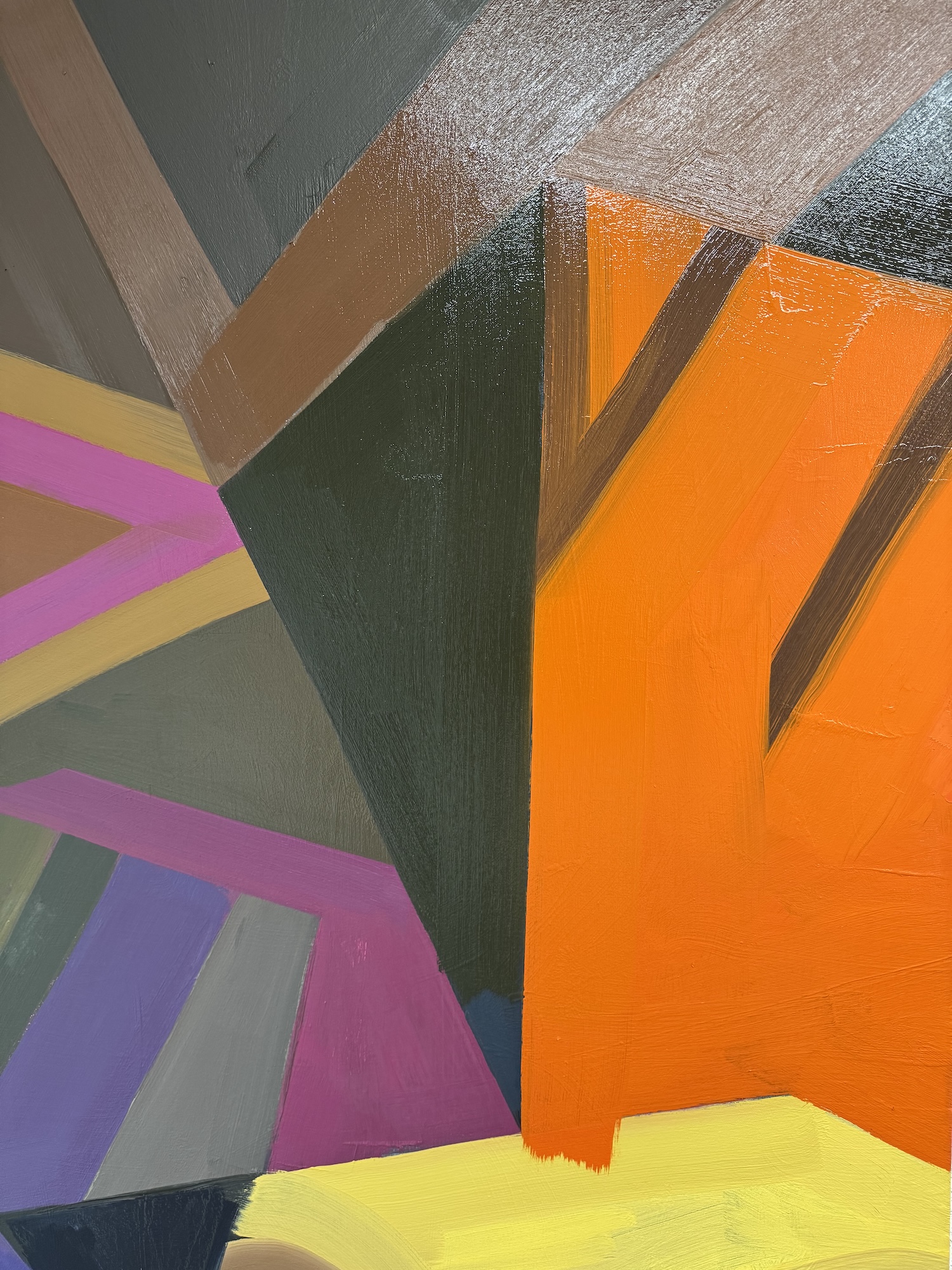
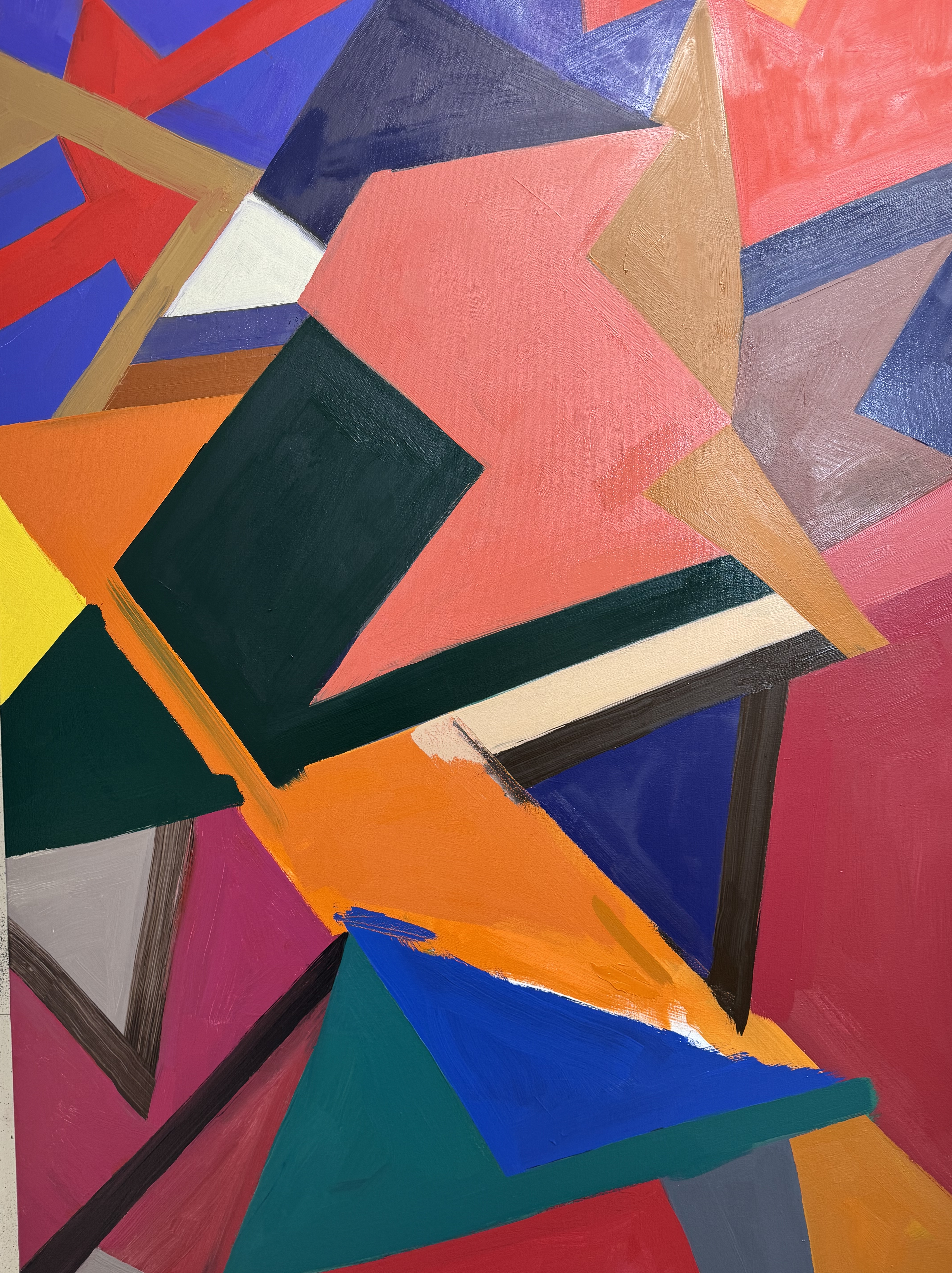
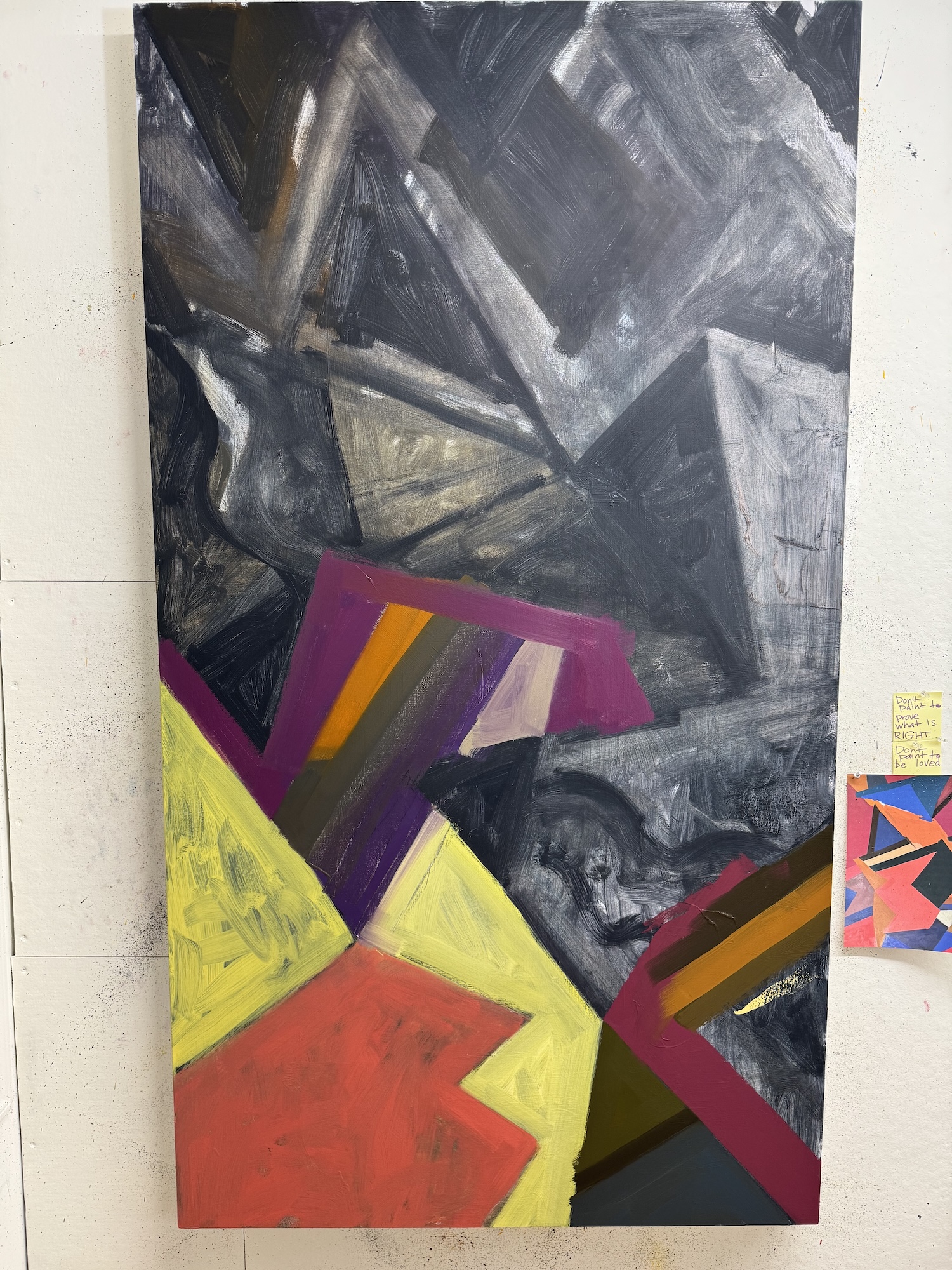
I began this painting on February 14th of this year and continued working on it consistently for nearly three months. The piece consists of three panels, each measuring 72 inches x 40 inches. When assembled, the painting stands 72 inches high and spans 120 inches wide. My inspiration for this work came from a painting I created when I was a nineteen-year-old student at the University of Michigan. Unlike others who might have arrived directly from high school, I had transitioned from Detroit, where I was enrolled in a liberal arts program focused on the natural sciences. This marked a significant shift for me, so I moved away from that academic beginning and into the realm of art – changing my mind, which has become a recurring theme throughout my life.
At that time, there was an interim dean, Emil Weddige, who was a printmaker and a lithographer rooted in traditional techniques. He kept a room filled with stones used for classic lithography. After reviewing my high school portfolio, he granted me advanced placement, though I would have to wait until the following year to take painting classes. Driven by a strong desire to paint, I improvised an easel in my dorm room using two overturned trash cans. It was this painting, created under these circumstances, that served as the model my current work.
The following photos of “Nineteen” in progress were taken between March 7 and March 21, 2026:

Painting
Looking back, I knew far less about painting then than I do now. However, what captivated me about that early work was precisely my lack of knowledge. I did not know much except that I wanted to paint. For instance, I painted while seated and used a relatively small brush, listening to radio station WDET in Detroit. Feeling homesick, I found comfort in familiar activities like listening to music or baseball.
One. memory that stands out is the absence of any plan or preparation – I simply started applying paint to the canvas. I may have outlined the forms before filling them with color, but there is no evidence of this in the finished painting. The shapes were intuitive, angular blocks of color constructed across the painting’s surface. The colors – pinks, purples, yellows, browns, grays – reflected the moment. It would be inaccurate to claim that I knew what I was doing; the act of painting itself was what mattered most. Only much later did I learn about construction, signs, attributes, compositional unity, and the interrelationship of color.
Obstacles
The question arises: Does it matter now that my hesitation to begin this project of recreating an old painting stemmed from viewing it as a negative endeavor? The answer is yes; it does matter. Overcoming the obstacle of doing something perceived as negative required breaking the ice in some way. As mentioned earlier, changing my mind has been a recurring motif in my life – embracing new ideas entails change and overcoming self-imposed barriers. It is essential to recognize these impediments before one can move past them.
I needed permission to remake a painting that I had always considered the work of a beginner, someone lacking knowledge. I also need permission to repeat myself, a practice discouraged early in my artistic journey by the example of Picasso, who famously claimed never to repeat himself. Whether this was true or relevant is open to discussion, but Picasso continued to draw inspiration from cubism throughout his life. The artists who I have reflected on since creating my dorm room painting share a common thread: their engagement with repetition and resistance to producing singular, individual works. Each picture may ultimately appear similar, but there is no compulsion to make each one unique. This painting resisted explanation, as though it refused to serve as a subject for conversation or illumination.
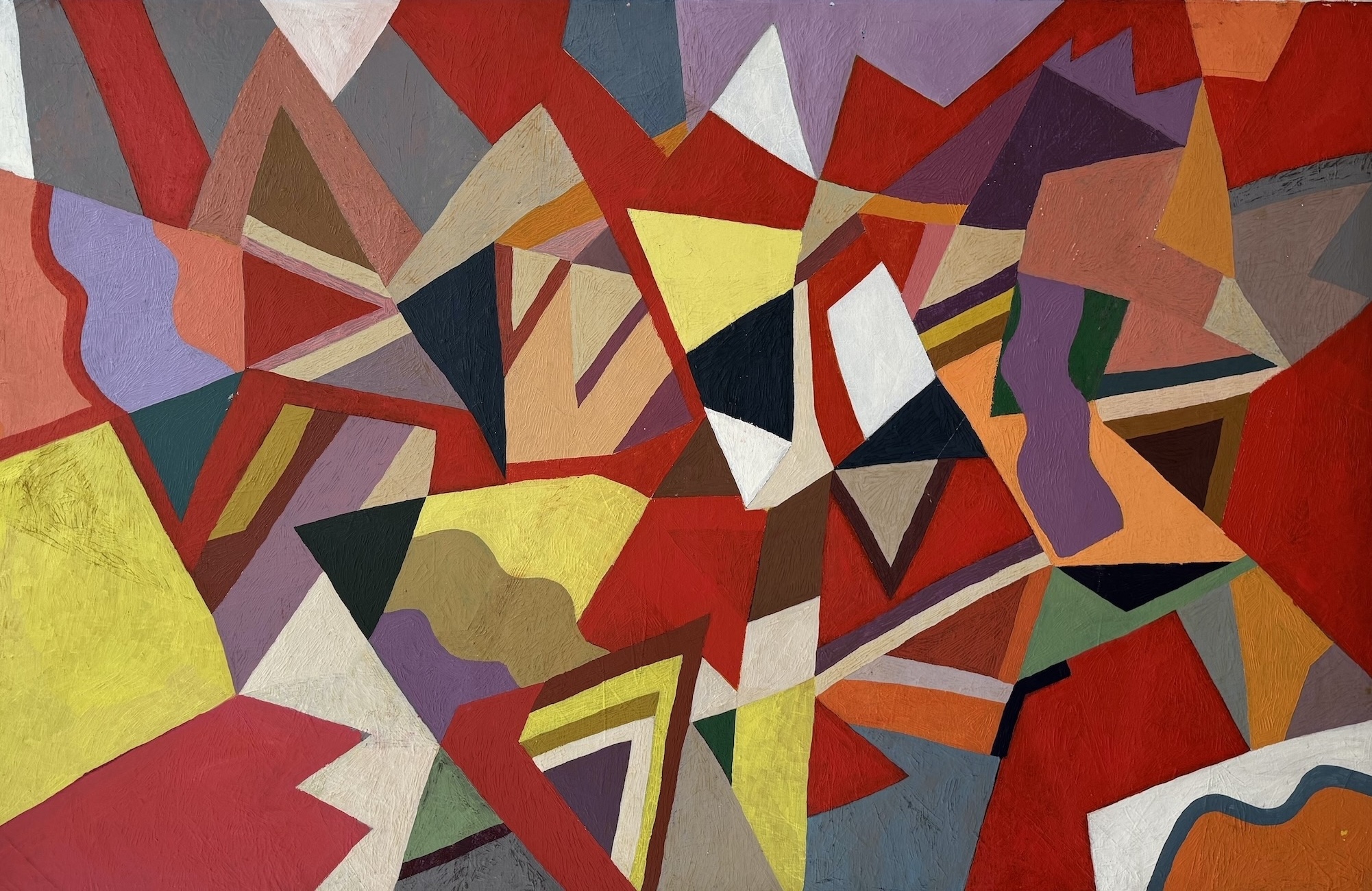
Peter Crow, Nineteen, oil on canvas, 40″ x 72″, 1972
Artwork and text copyright, Peter Crow, 2026.
 Peter Crow - Artist
Leave a comment